
Blood pressure
How to take a blood pressure reading at home, step by step
Small things move the number: a coffee, a cigarette, crossed legs, talking. A calm routine gives you readings you and your GP can rely on.

A reading taken straight after rushing up the stairs with a coffee in hand tells you more about the stairs than about you. Blood pressure moves from minute to minute. A short, calm routine, done the same way each time, gives numbers you can compare.
The routine below follows the advice in Blood Pressure UK's guide to checking your blood pressure at home and NHS patient leaflets.
Before you start
- No caffeine, smoking or exercise for 30 minutes.
- Go to the toilet first, so you can sit still and relaxed.
- Pick a quiet spot with a table and a chair with a back.
- Try to measure at the same times each day, for example morning and evening.
Step by step
- Sit down and rest for five minutes. Back against the chair, feet flat on the floor, legs uncrossed.
- Put the cuff on bare skin. Roll up your sleeve, making sure it isn't tight around your arm. The cuff's lower edge sits just above the crease of your elbow, with the tube where your monitor's manual shows.
- Rest your arm on the table. The cuff should be level with your heart, palm up, arm relaxed.
- Press start and stay still. Don't talk, laugh or move until it finishes.
- Wait a minute or two, then take a second reading.
- Write down both readings with the date and time. Many monitors store them for you, and some send them to an app.
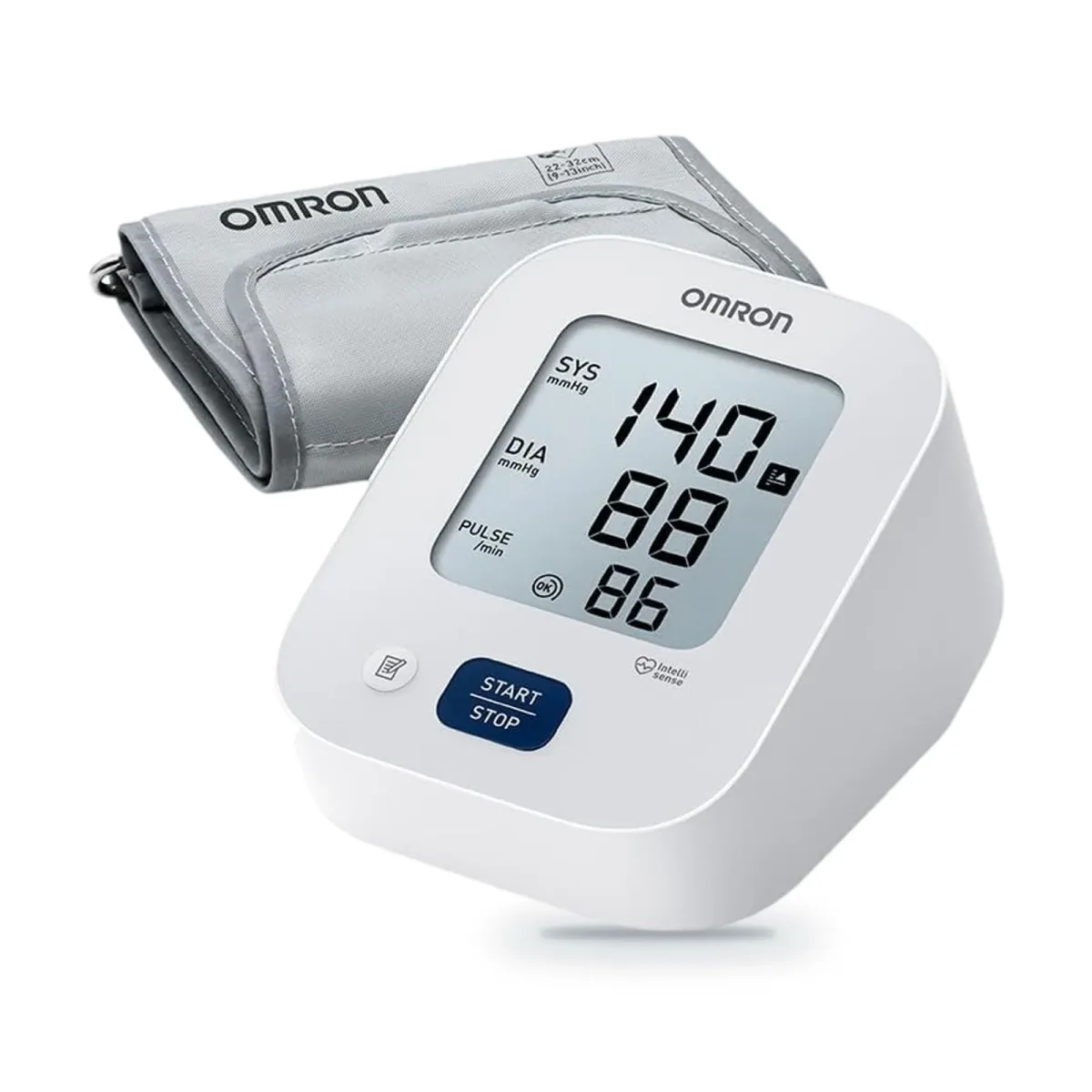
Check the cuff size
A cuff that's too small or too large gives misleading readings. Measure around the middle of your upper arm and check the cuff range on the box.
| Monitor | Cuff range |
|---|---|
| Omron M2 Essential | 22 to 32 cm |
| Omron X2 Basic | 22 to 32 cm |
| Omron X3 Comfort AFib | 22 to 42 cm |
| Omron X4 Smart | 22 to 42 cm |
What the numbers are
A monitor shows two main numbers, like 125/82. The top one (systolic) is the pressure when your heart beats; the bottom one (diastolic) is the pressure between beats. Most monitors also show your pulse. What your readings mean for you is a question for your GP or nurse, so take your notes along.
Common mistakes
- Measuring over a sleeve.
- Letting the arm hang down instead of resting it at heart level.
- Taking one reading and stopping.
- Using a cuff that's the wrong size.
 Buy now
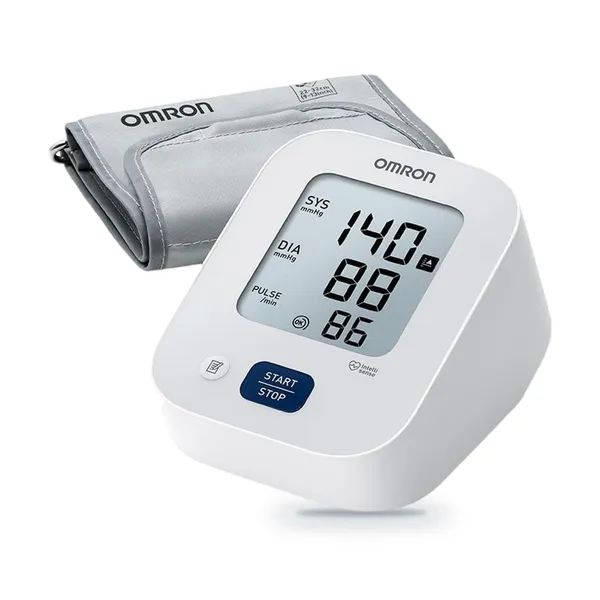
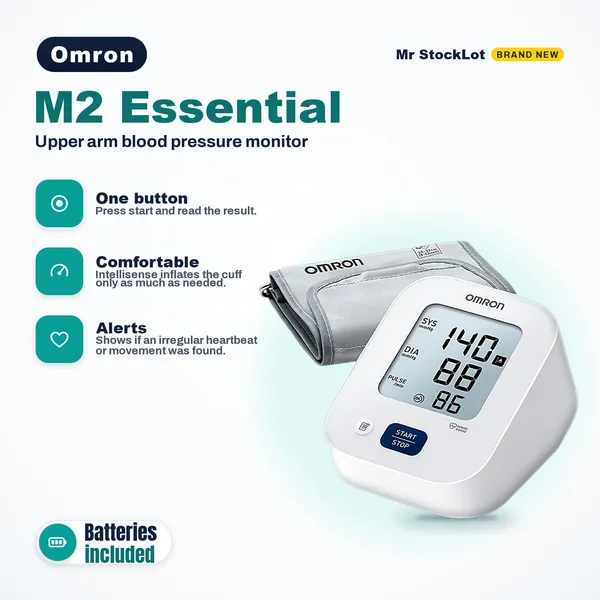
Omron M2 Essential Upper Arm Blood Pressure Monitor
£27.89 inc. VAT
Free UK delivery
 Buy now
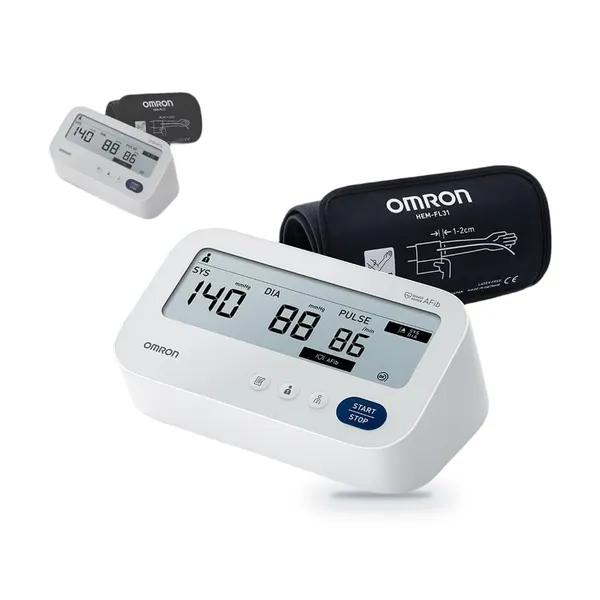
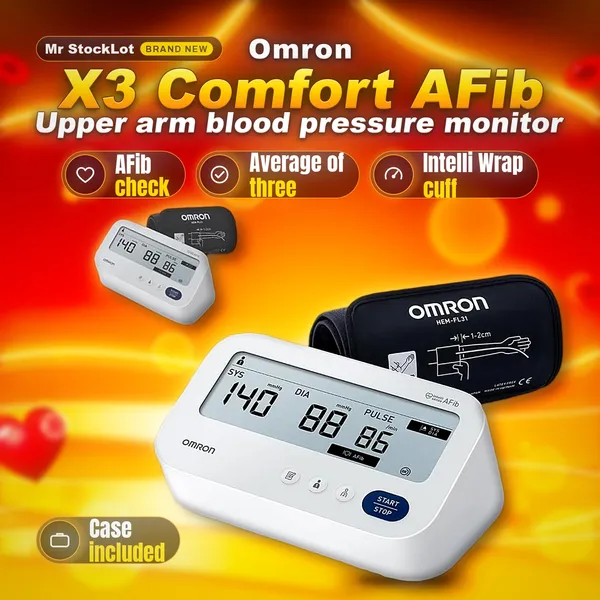
Omron X3 Comfort AFib Upper Arm Blood Pressure Monitor
£47.89 inc. VAT
Free UK delivery
 Buy now
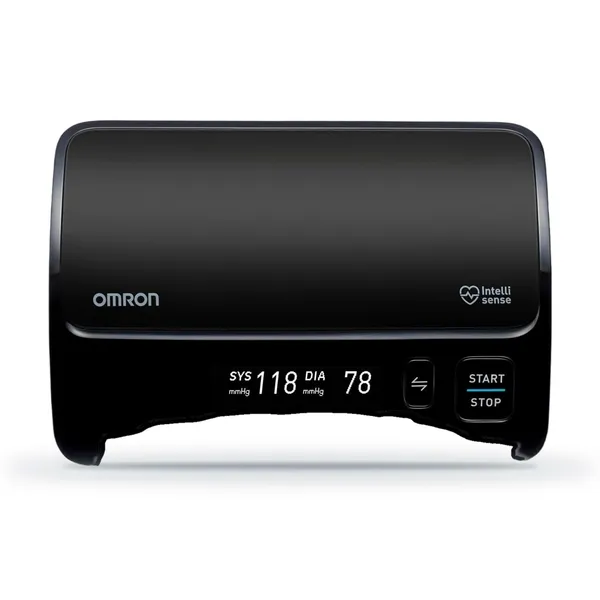
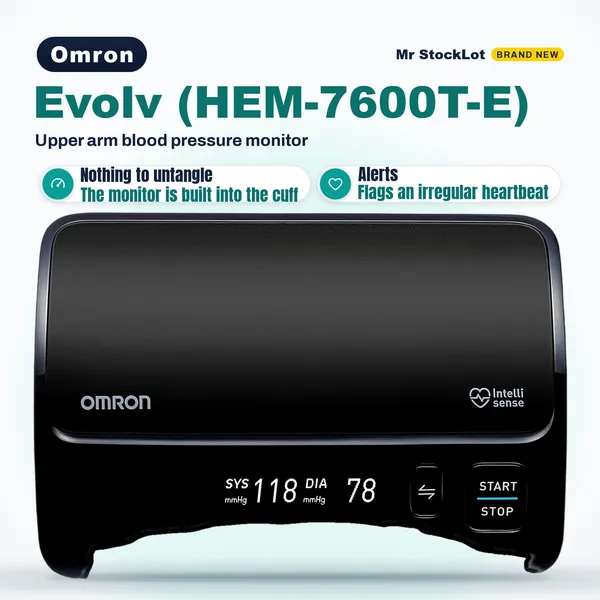
Omron Evolv All-in-One Wireless Upper Arm Blood Pressure Monitor
£74.89 inc. VAT
Free UK delivery
Questions people ask
Which arm should I use for a blood pressure reading?
Use the arm your GP or nurse suggests, and use the same arm every time so your readings compare like for like.
How many readings should I take?
Take two readings a minute or two apart each time, and record both. Your GP may ask for readings twice a day for a week.
Why is my reading different each time?
Blood pressure changes through the day and with talking, moving, caffeine, stress and position. A calm, repeated routine reduces that.
Choosing a monitor? Read which Omron blood pressure monitor and wrist vs upper arm.


