
Toothbrushes
How to use a water flosser, step by step
Lukewarm water, the lowest setting, lean over the sink with your lips nearly closed, and follow the gumline. How to use a water flosser, keep it clean, and where it fits next to brushing and floss.

The first time most people use a water flosser, the bathroom mirror gets wet. That's normal and it's mostly technique: lean over the sink, nearly close your lips round the tip, and let the water run out into the basin. After a few goes it stays in the sink.
Before you start
- Charge it. The Waterpik Cordless Advanced 2.0 charges by USB.
- Fill the reservoir with lukewarm water. Waterpik suggests warm water, and cold can feel sharp on sensitive teeth.
- Click in a tip. Everyone in the house should have their own.
- Start on the lowest pressure for the first few days. The Cordless Advanced 2.0 runs from 45 to 75 PSI.
Step by step
- Lean over the sink and put the tip in your mouth before you switch on.
- Nearly close your lips to stop splashing, and let the water flow out into the sink.
- Switch on and aim the tip at the gumline.
- Start with the back teeth and work round, following the gumline and pausing briefly between each tooth.
- Do the outside and the inside of the top and bottom teeth.
- Switch off before you take the tip out of your mouth.
- Empty the reservoir and let it dry.
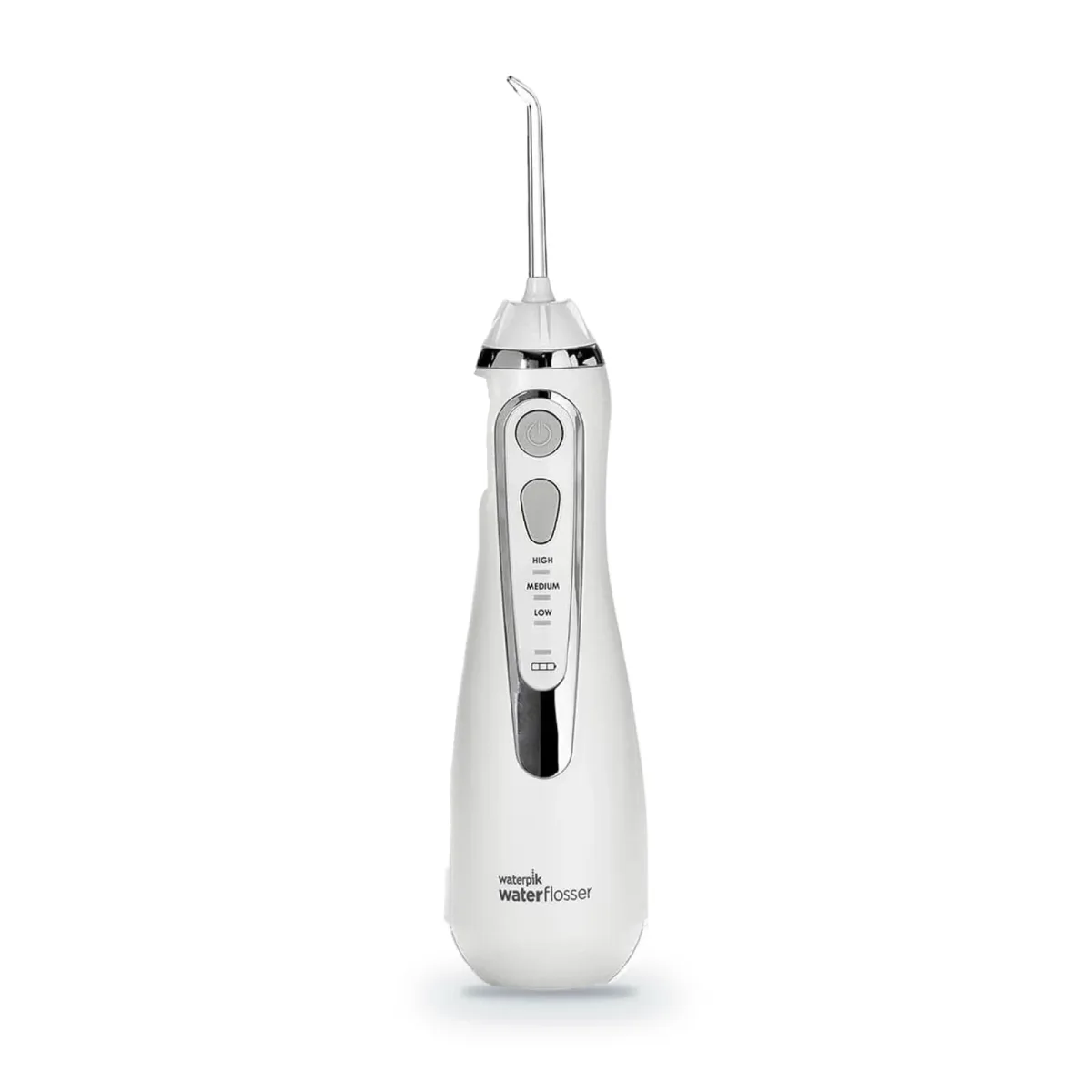
Water flosser, floss or interdental brushes?
| String floss | Interdental brushes | Water flosser | |
|---|---|---|---|
| How it cleans | Thread scrapes the sides of each tooth | A tiny brush pushed between teeth | A jet of water between teeth and along the gumline |
| Suits | Tight gaps | Bigger gaps; comes in sizes | People who find floss fiddly; braces, bridges and implants |
| Needs | Practice | The right size for each gap | Charging, a sink and regular cleaning |
The Oral Health Foundation, the UK dental charity, describes water flossers as a useful extra, especially if you find floss difficult, and says they belong in a full routine, not instead of brushing or other cleaning between the teeth. It also notes that floss and interdental brushes physically scrape plaque in a way water alone can't always match. If you have gum problems or dental work, your dentist or hygienist can tell you which method suits you.
With braces or dental work
Waterpik says the Cordless Advanced 2.0 is suitable round braces, implants, crowns and bridges, and the Oral Health Foundation notes water flossers can be easier for people with braces, bridges or implants. Follow your orthodontist's or dentist's advice for your own mouth.
Keeping it clean
- Empty the reservoir after each use and leave it to dry.
- Once a month, Waterpik suggests running a mix of warm water and white vinegar through it, then a full reservoir of clean warm water.
- Change the tip every three to six months, as Waterpik suggests.
 Buy now
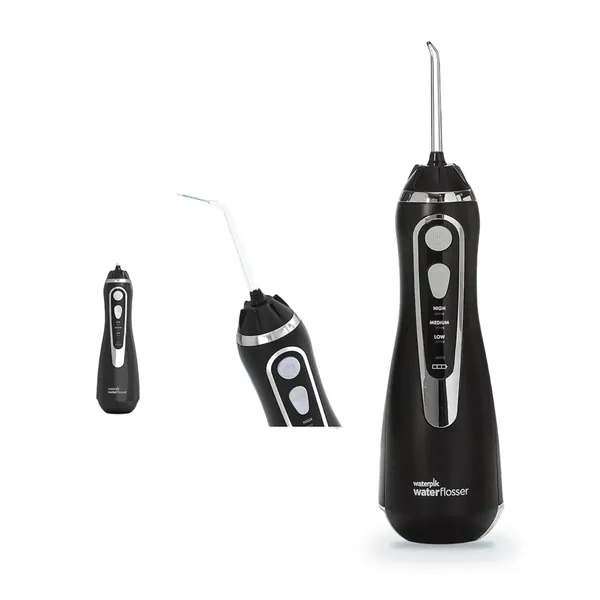
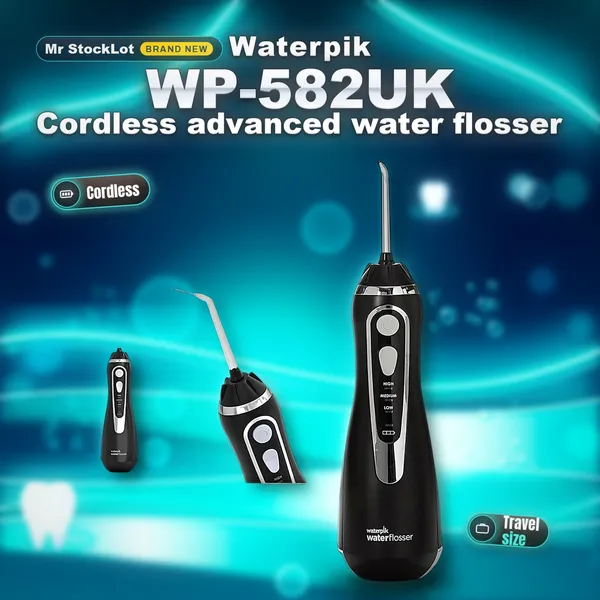
Waterpik Cordless Advanced 2.0 Water Flosser, Black
£74.89 inc. VAT
Free UK delivery
 Buy now
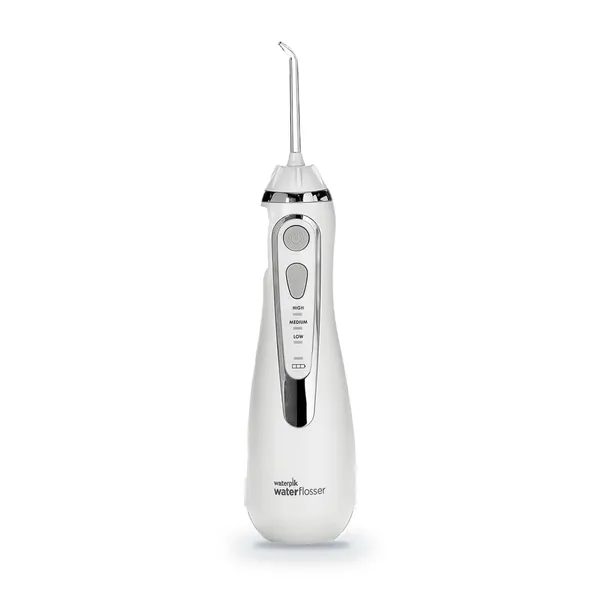
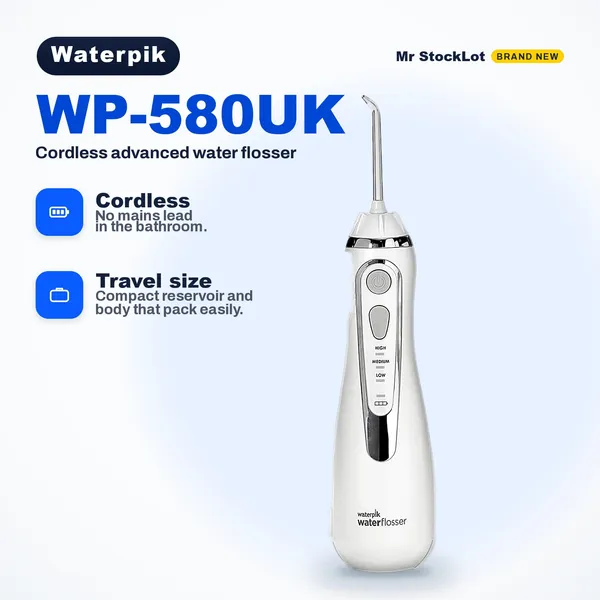
Waterpik Cordless Advanced 2.0 Water Flosser, White
£74.89 inc. VAT
Free UK delivery
Questions people ask
Does a water flosser replace brushing?
No. Keep brushing twice a day for about two minutes with fluoride toothpaste, as the NHS advises. A water flosser cleans between your teeth and along the gumline as an extra.
Can I use a water flosser instead of floss?
The Oral Health Foundation sees water flossers as a useful extra, especially if you find floss hard to use. Your dentist or hygienist can tell you whether it's enough on its own for your teeth.
Can I use a water flosser with braces?
Waterpik says the Cordless Advanced 2.0 is suitable round braces, implants, crowns and bridges. Follow your orthodontist's advice.
How often should I change the tip?
Waterpik suggests every three to six months.
Both flossers above are brand new in Waterpik's packaging. Brand-new single items are delivered free to the UK mainland, dispatched the next working day, and delivery usually takes 3 to 5 working days, occasionally up to 7. Choosing a brush to go with it? Read Oral-B or Philips Sonicare, or see all our toothbrushes and flossers.
Sources we used
- Waterpik: how to use a water flosser and cleaning with vinegar, checked 21 November 2026.
- Oral Health Foundation: water flossers.
- NHS: How to keep your teeth clean.
- Our own listings for the Waterpik Cordless Advanced 2.0 (WP-580UK and WP-582UK).


